

Neurofeedback Services
Mindfulness is a mental state that promotes awareness of the present moment. Mindfulness is supported by a non-judgmental attitude towards our own experience and promotes the development of kindness and self-compassion.
We do not exist as separate parts — our emotions, our thoughts, our nervous system, our relationships, and our sense of meaning all shape how we experience life. Real transformation happens when we honour the full 360° of our wellbeing: mind, body, and soul.
Neurofeedback became part of my practice because it supports the very foundation of our emotional and mental life: the brain’s natural ability to regulate itself and adapt to the world around us. When the brain is flexible, we feel clearer, calmer, more grounded, and more connected.
I believe that every person deserves access to an optimised, resilient brain — not to become someone different, but to more easily become who they already are.
What I appreciate most about Neurofeedback is its gentleness. It doesn’t push or force; it simply gives the brain subtle information that helps it remember its own innate capacity to realign and reorganise. This fits deeply with my therapeutic philosophy:
healing should guide, not overwhelm. It should support, not pressure.
Neurofeedback is not a standalone cure, but it is a powerful complement to psychological work, lifestyle change, emotional processing, and trauma-informed practices. It often becomes a turning point — a gentle doorway back into clarity, regulation and authentic presence.
What Is Neurofeedback?
Neurofeedback is a non-invasive method that helps the brain understand its own activity and naturally reorganise itself towards healthier functioning. Through real-time auditory feedback, it allows the brain to recognise inefficient patterns and shift back into balance.
It is particularly helpful when stress, trauma, overwhelm, or chronic difficulties have created rigid or repetitive neural patterns. By bringing awareness to these patterns, Neurofeedback supports the brain’s neuroplasticity — its ability to adapt, heal, and change.
People often seek Neurofeedback to improve:
- Emotional resilience
- Stress and anxiety regulation
- Focus and cognitive clarity
- Sleep quality
- Mood stability
- Overall wellbeing
It is safe, gentle and suitable for adults and children.
How Neurofeedback Works
The brain is a dynamical system — constantly adapting to stimuli, internal states, and the environment. When it becomes overwhelmed, exhausted, or shaped by trauma, this natural adaptability can diminish.
During a session:
- Small, painless sensors placed on the scalp read the brain’s electrical activity (similar to an EKG for the heart).
- You relax while listening to music or watching calming visuals.
- When the brain moves into a “turbulent” or less efficient pattern, the music briefly pauses.
- This tiny interruption prompts the brain to reorient and self-correct — a natural, instinctive response.
There is no stimulation and no external force applied. The brain simply receives information and decides what to do with it — moment by moment.
Over time, these micro-adjustments support improved flexibility, balance, and emotional regulation.
The Brain Boost Programme (Adults)
The Brain Boost Programme is a gentle, structured Neurofeedback process supporting adults who wish to enhance their wellbeing, emotional regulation, performance, or overall mental clarity.
What to Expect in a Session
There is nothing you need to do — no tasks, no concentration, no effort. Simply sit back, relax, and allow your brain to follow its natural adaptive capacity.
How Many Sessions Do I Need?
Every nervous system is unique, but as a general guide:
- 10–12 sessions → short-term, noticeable improvements
- 20–30 sessions → deeper and more sustained changes
- Maintenance sessions are optional
- Training can be paused and resumed at any time
The effects of Neurofeedback tend to last because they reflect learning. Life stressors may temporarily destabilise the system, but the brain usually rebalances quickly with 1–2 refresher sessions.
Benefits for Adults
- Feeling calmer and more grounded
- Improved sleep quality
- Reduced anxiety and emotional reactivity
- Greater confidence and clarity
- Enhanced cognitive performance
- Better stress management
- Support for life transitions, burnout recovery or emotional fatigue
- A sense of having “more good days than bad”
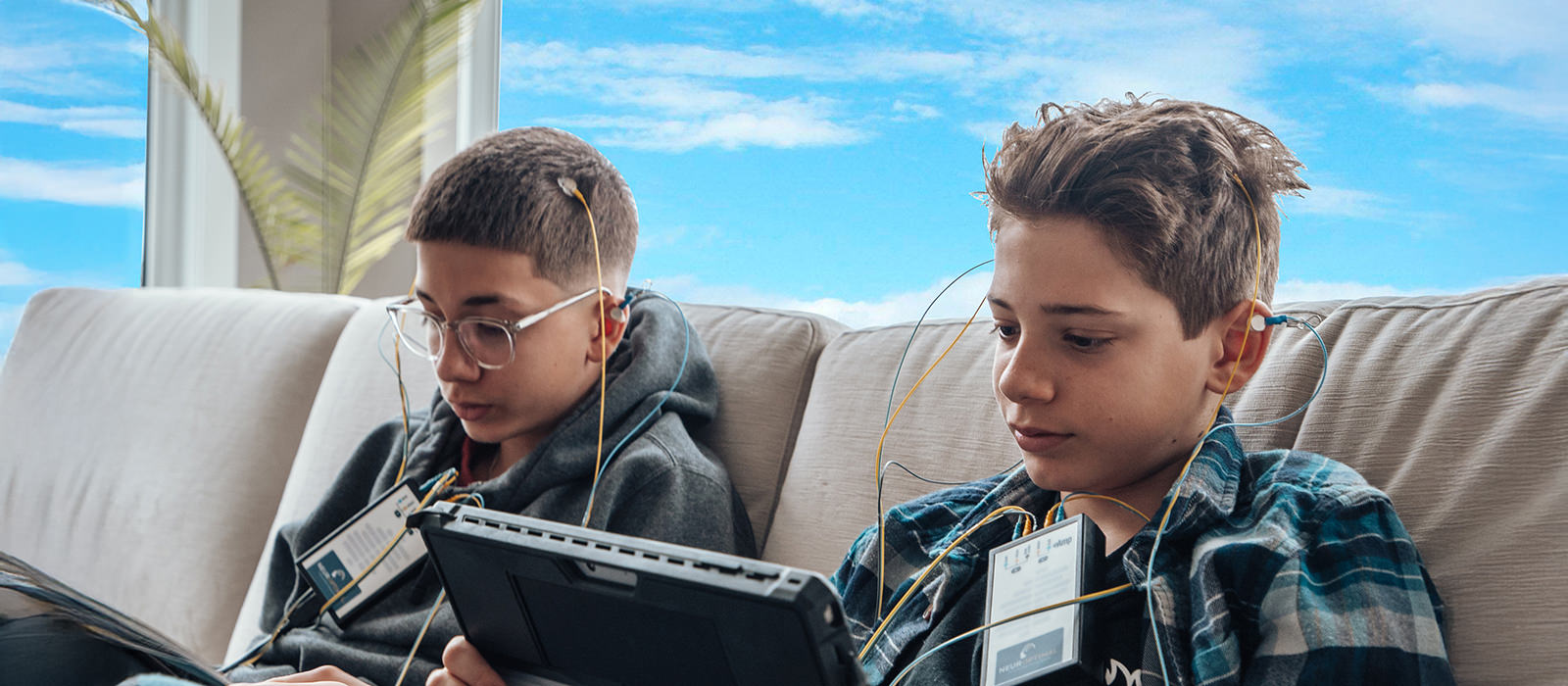
Neurofeedback for Children
Neurofeedback can be particularly supportive for children who struggle with emotional regulation, attention, anxiety, sleep difficulties or sensory sensitivities.
It offers a gentle, non-verbal way for children to strengthen their self-regulation without needing to talk about feelings or understand complex instructions.
Who It Can Support
- Children with attention or focus challenges
- Children experiencing anxiety or worries
- Emotional meltdowns or shutdowns
- Sensory processing sensitivity
- Sleep difficulties
- Behavioural struggles
- School-related stress
- Children looking to enhance learning or performance
What Happens in a Child’s Session
Most children enjoy the sessions — it often feels like a calming “brain movie time”.
Typical Benefits for Children
- Improved attention and focus
- Fewer emotional outbursts
- Better sleep
- Increased calm and confidence
- More balanced behaviour
- Improved engagement at school
The Science Behind Neurofeedback
Neurofeedback has roots in decades of neuroscience, beginning with the discovery of EEG brainwaves in the 1920s. Over the years, research has explored its role in supporting emotional regulation, trauma recovery, cognitive performance, attention difficulties and stress-related symptoms.
Modern dynamical Neurofeedback draws on the work of:
- Karl Pribram, pioneer of neuropsychology
- Dr Valdeane Brown, psychologist and mathematician
Their work explores the brain as a continuously adapting, nonlinear system — one that can be gently guided back toward balance through precise, real-time feedback.
What Research Suggests
While research continues to grow, studies suggest benefits for:
- Anxiety and stress regulation
- ADHD symptoms
- Trauma recovery and sleep improvements
- Cognitive performance and focus
- Headaches, tinnitus and other neurological symptoms
- Peak performance in academic, creative, and athletic contexts
Neurofeedback is a non-pharmacological approach that works directly with the brain’s own self-regulatory mechanisms.
Is Neurofeedback Right for You or Your Child?
Neurofeedback may be a supportive option if you are seeking:
- A gentle, natural approach to emotional regulation
- Improvements in attention, clarity, and wellbeing
- Support during or after stressful periods
- A complement to therapy, mindfulness or lifestyle changes
- A more integrated mind–body approach to healing